
Day 110
Arriving in Silver Lake, Kansas
Today’s Walk:
D: Zeandale, Kansas
A: Silver Lake, Kansas
35.7 miles
. . . . . . . . . . . . . . . . . . . . . .
Elevation:
↑725 • ↓807
. . . . . . . . . . . . . . . . . . . . . .
Conditions:
↓70° ↑91° ⛅️


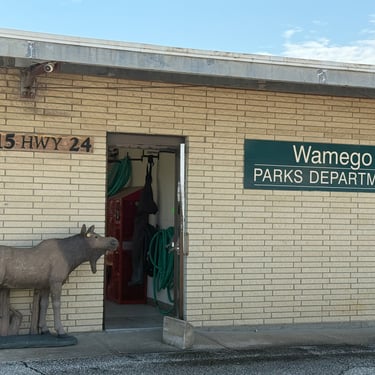
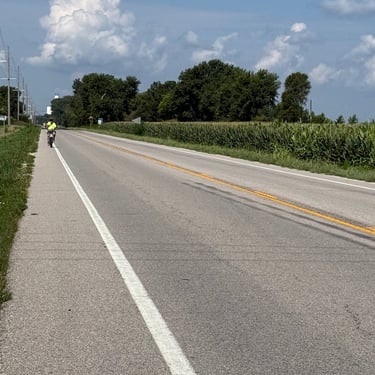
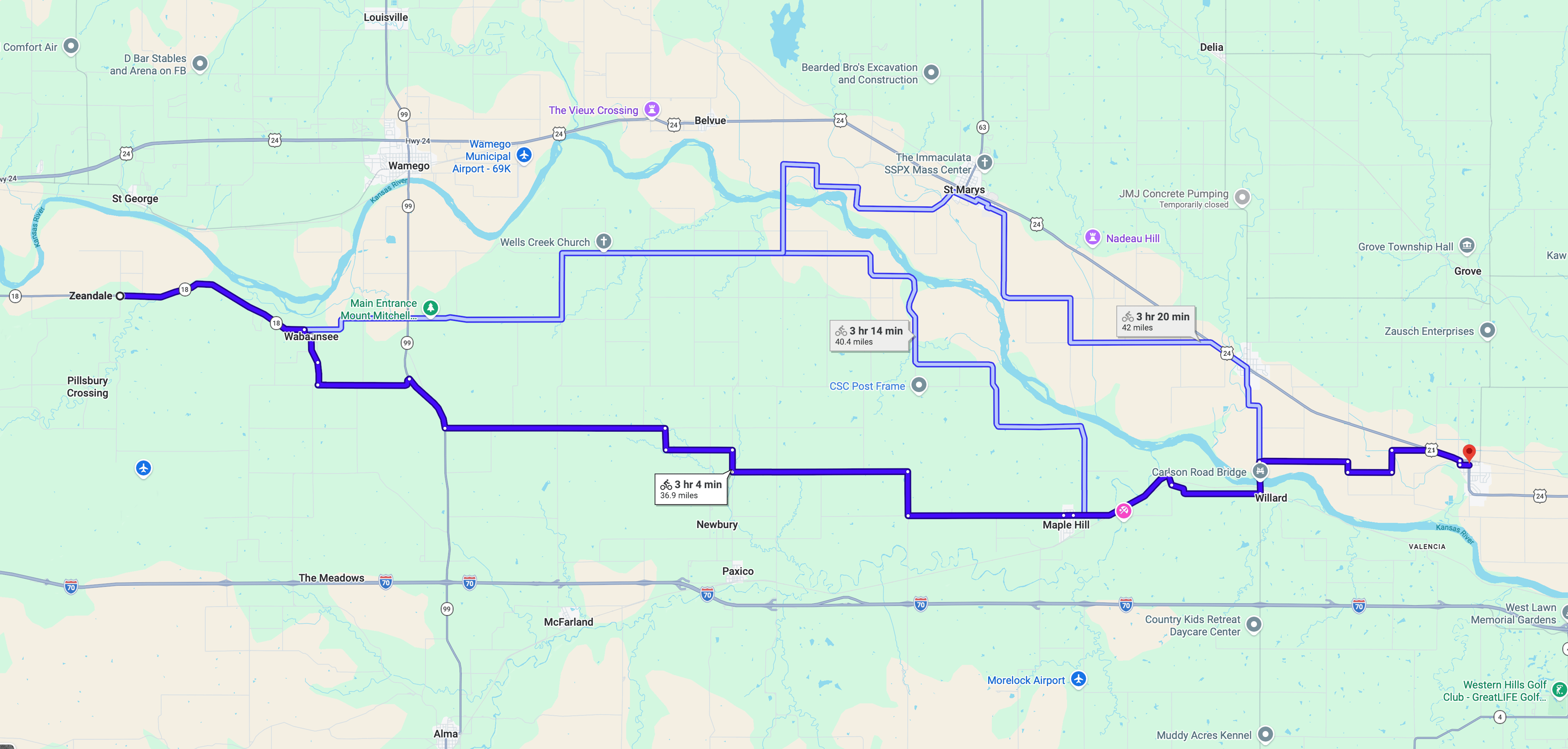
Mapping routes for the walk and the ride is a significant task. Mapping a ride uses different criteria than mapping a walk. It is challenging to find the least rough road, not heavily traveled, fairly direct, with a shoulder sans debris and rumble strips. Topeka, like much of the Midwest, has significant road construction projects underway, leading to roads that end in gravel pits, roads filled with construction debris, and roads that are not simply designed for a bike to travel safely. We spent a good couple hours identifying, mapping, and exploring possible routes. (Read tomorrow’s post for information about the unanticipated challenge encountered in the route we finally chose.)
Susan rode 30.5 Kansas miles today through Blue, St. George, Wamego, Belvue, St. Mary’s, Rossville, and into Silver Lake Township.
We started fairly early to cover a lot of miles and then route our ride into Topeka. It was a beeline through some beautiful small towns to the outskirts of Topeka.
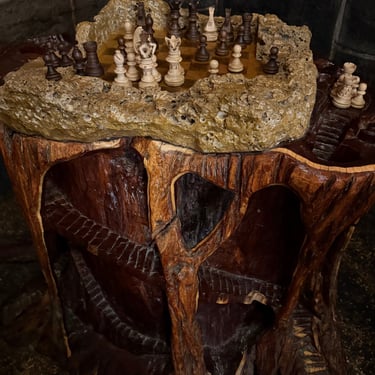
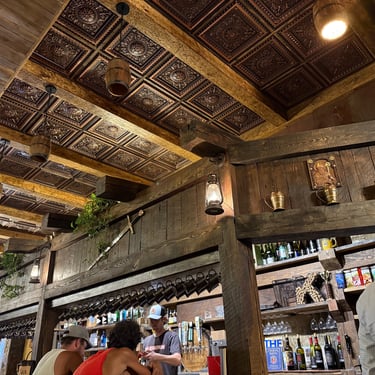
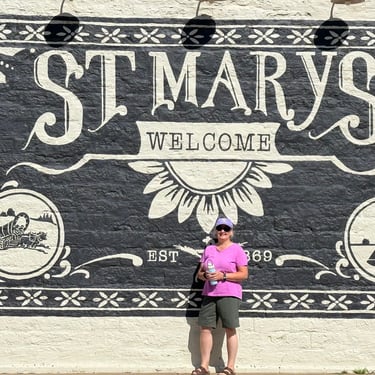
We lunched at The Pilgrim’s Keep in St. Mary’s. The restaurant was fascinating, decorated in a medieval style, with furniture and a chess board handmade by the owner. The wait staff took time to answer our questions about the town. The restaurant manager was interested in hearing about the Women’s Walk Across American and wished us well on our journey.
St. Mary’s was founded by missionaries who established a mission and Indian school.
We noticed a sign on the outskirts of St. Mary’s, pointing to the St. Mary’s Pay Station Museum. While we didn’t have time to visit the museum, it piqued our interest, prompting Susan to read about it. Native Americans were moved originally from the Great Lakes region to Kansas, where they were allotted land to establish a reservation. Later the government allowed them to move to Patawatomi County. When the Patawatomi exchanged their land in the Great Lakes region for a reservation in Kansas, the U.S. government agreed to pay $3 million, distributed in small payments every three months. They paid the money over five years. A newspaper account of the last annuity payments in St. Mary’s in 1870, described the event as “an utterly forlorn, dismal, and miserable spectacle.” A paymaster from the Department of Interior read the names off from inside the building, and an interpreter in the doorway called the names outside, each individual coming forward to the building to get his pay. Most of the money passed immediately to traders, or others already having claims against the Indians. The Potawatomi Indian Pay Station is the oldest surviving building of the St. Mary’s Indian Mission. Source: National Register of Historic Places Inventory - Nomination Form, U.S. Department of the Interior, National Park Service.